
How to Stop Overthinking and Actually Take Action
If you’re feeling stuck in your head, it’s not actually all in your head.
It’s in your body too. It might actually be your nervous system responding to stress, uncertainty, or something new. It’s trying to keep you safe.
Now, I’m not talking about overthinking in a rumination sort of way, like replaying conversations over and over in your head wishing you said something different… that’s a different conversation.
I’m talking about the kind of overthinking where you try to plan everything out before taking the first step. Where you try to analyze all the possible outcomes, with only the assumptions you have in your mind and no real world data.
You want to make sure you get it "right" on the first try, so you don't waste time, but you get so tangled up in overthinking and re-planning, that you don’t actually do the plan at all.
Overthinking vs Indecision
Overthinking and indecision are such close besties, you sometimes can’t tell which is which.
Overthinking is the doing: the replanning, the analyzing, the "what if x,y,z".
Indecision is the feeling: that stuck, frozen, can't-choose sensation you have when you’ve been stuck in overthinking for too long.
You don't feel indecisive because you lack information. You feel indecisive because your nervous system hasn't found the "safe enough" signal it's looking for, so it won’t let you choose anything.
Two Examples You Might See Yourself In
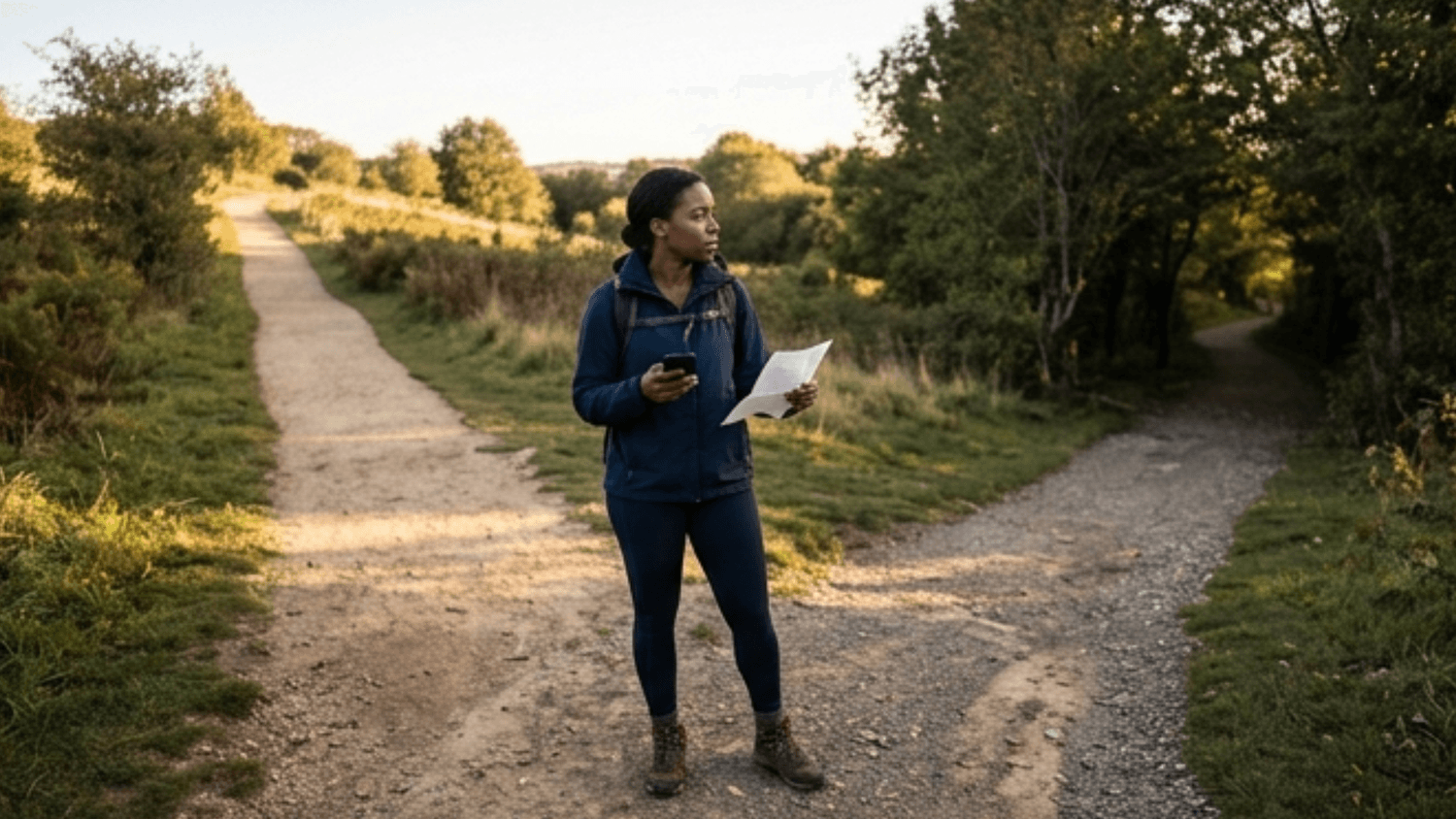
Say you are starting a new career path or a side hustle passion project. There’s a lot of uncertainty there and it’s also very exciting!! You’ve got ideas, this new path feels aligned with who you are and what you love.
So, you start making a plan. It’s looking good, clear, good enough to get started, but then something comes into your head and tells you it’s not quite right.
Self-doubt starts to creep in…so you edit the plan and the feeling of excitement starts to increase again. “Yes,” you’re thinking, “this is it.”
But then another sneaky thought comes in, Oh maybe that part isn’t quite right. What if…
So you go back to the drawing board. Start planning it out, again. Changing it slightly, again. And then suddenly it’s 6 months later and you’re in the exact same spot. (hi, it’s me, I’ve definitely been there too)
Another example:
You've just decided you're finally going to prioritize your health. Maybe you had a wake-up call, maybe the burnout or exhaustion finally won and you’re ready to change.
You start imagining what your life could feel like. More energy. More calm. A body that feels powerful and strong.
So, you start making a plan! New sleep schedule, new way of eating, movement or exercise plan, maybe therapy, maybe coaching. It's looking good…
But then something comes into your head and tells you it's not quite right.Self-doubt creeps in.
What if this diet isn't the "right" one? What if I start and it doesn't work? What if I don’t like yoga/ running/ lifting weights? What if I need a different therapist?
So you edit the plan. Research a little more. The feeling of hope starts to rise again. "Yes," you're thinking, "this is the one."
But then another sneaky thought comes in: Wait, maybe that part isn't right either. What if I should try…
So you go back to square one. Again. Tweaking it slightly. Again. 🙃
Notice a pattern?
In both of these examples it’s all HYPOTHETICAL and you don’t have any real data to base these changes on. And I say this with so much love… because trust me, I’ve been there too, but that’s crazy pants!
What's Actually Happening In Your Body
Firstly, there’s nothing wrong with you.
Your nervous system is working perfectly. It’s just running an old pattern where these new ideas are being interpreted as a lack of safety, and your brain’s number one job is survival, aka to keep you safe, so it stops you from doing it.
Your brain is constantly scanning your environment and asking, “Am I safe?”. And right now, this exciting new career/ health journey / unfamiliar territory with no guarantees is not being perceived as safe.
Unfamiliar = unsafe
It’s seeing a decision as a threat.
Taking action as a threat.
The only problem is: it isn’t actually unsafe.
It is safe, but your nervous system isn’t perceiving it that way. So what does it do? It causes you to overthink! To stay stuck in indecision. In limbo. In planning over, and over, and over. It comes up with all sorts of ways to keep you in your old pattern.
What is being perceived as “safe” right now?
Getting more information.
Changing your idea.
Pivoting, again.
Making another plan.
It makes sense, right?
None of that requires you to actually risk anything.

Getting Stuck in a Loop
Psychologist Stephen Porges came up with the term neuroception, which is the nervous system's way of constantly looking for cues of safety or danger, without asking your permission or waiting for your conscious brain to weigh in first. It's an unconscious process that happens before you're even aware of it and is our body’s way of watching out for us. And it’s very useful when there is actual danger around, but it can get confused.
When your nervous system senses a threat, your brain shifts into survival mode, and in survival mode, it's not trying to interpret things accurately, it's trying to keep you alive. So it'll trust a feeling of danger over actual evidence, every time.
The problem is your nervous system doesn't know the difference between "gather more data from the real world" and "gather more data by spinning the same hypothetical scenario in my head for the eleventh time."
It just knows: not moving yet = still safe.
So it keeps you in the loop. Replanning. Re-imagining. Thinking too far ahead. Doubting yourself.
Not because you're broken or bad at this, but because your body is doing exactly what it's designed to do when it doesn't yet have real evidence that this is okay.
The only thing that actually gives your nervous system real data is action.
But, overthinking convinces you that you need to feel certain before you act. So you wait for a feeling that can only be created by the very thing you're waiting to feel certain about.
How Do We Change This Pattern?

You can’t think your way out of it. You need to create a feeling of safety in the body and then take a step in the new direction even if you start to doubt yourself.
What you have to do is:
Regulate and create a sense of safety in your nervous system
Make a choice for your next step.
Take an action. You gotta do something, even when you start to feel anxious or uncertain about it and your brain starts coming up with reasons not to!
Remind yourself what’s happening when you feel pulled to go back to planning mode and move forward anyway.

What this looks like in more detail:
Regulate: A few slow exhales, longer than your inhale, signal safety to your nervous system. One simple, well-studied version of this is the physiological or cyclic sigh: two inhales through the nose, then one long exhale out. Stanford research found five minutes of this daily reduced stress, improved mood, and even lowered resting breathing rate over time. This isn't about calming your thoughts. It's about calming the system that's creating them. (There are many other ways to regulate which I will get into in another blog post, but this is an easy one to start with)
Choose your next step: Don’t plan the whole thing, just focus on what’s next. You can’t see the whole staircase yet, so take one step at a time. One small, low-stakes, reversible action. Small enough that your body doesn't sound the alarm.
Take the step: Remember, the plan is hypothetical until you test it. One small action gives you something a hundred more hours of planning never could: real feedback. Not "what if," but "oh, that's what actually happened." That's the thing that updates your nervous system's sense of safety, even if it feels uncomfortable in the moment.
If the fear, self-doubt, or uncertainty come back, Name what's happening, out loud or on paper. Remind yourself: “This is my nervous system responding to uncertainty and trying to protect me. This is not a sign that something's wrong. I am safe and I am going to learn so much from this action. There is no wrong way forward.”
Now you’ve researched enough, go do it. 🚀
Still Struggling? ♥️
It might be time to get professional support from a counsellor.
You can book a free discovery call with me, for a vibe check and to chat about how I can help you heal your past and start making moves towards your goals.
No pressure to sign up for anything after the call. Only if it feels right.
Orissa Steller
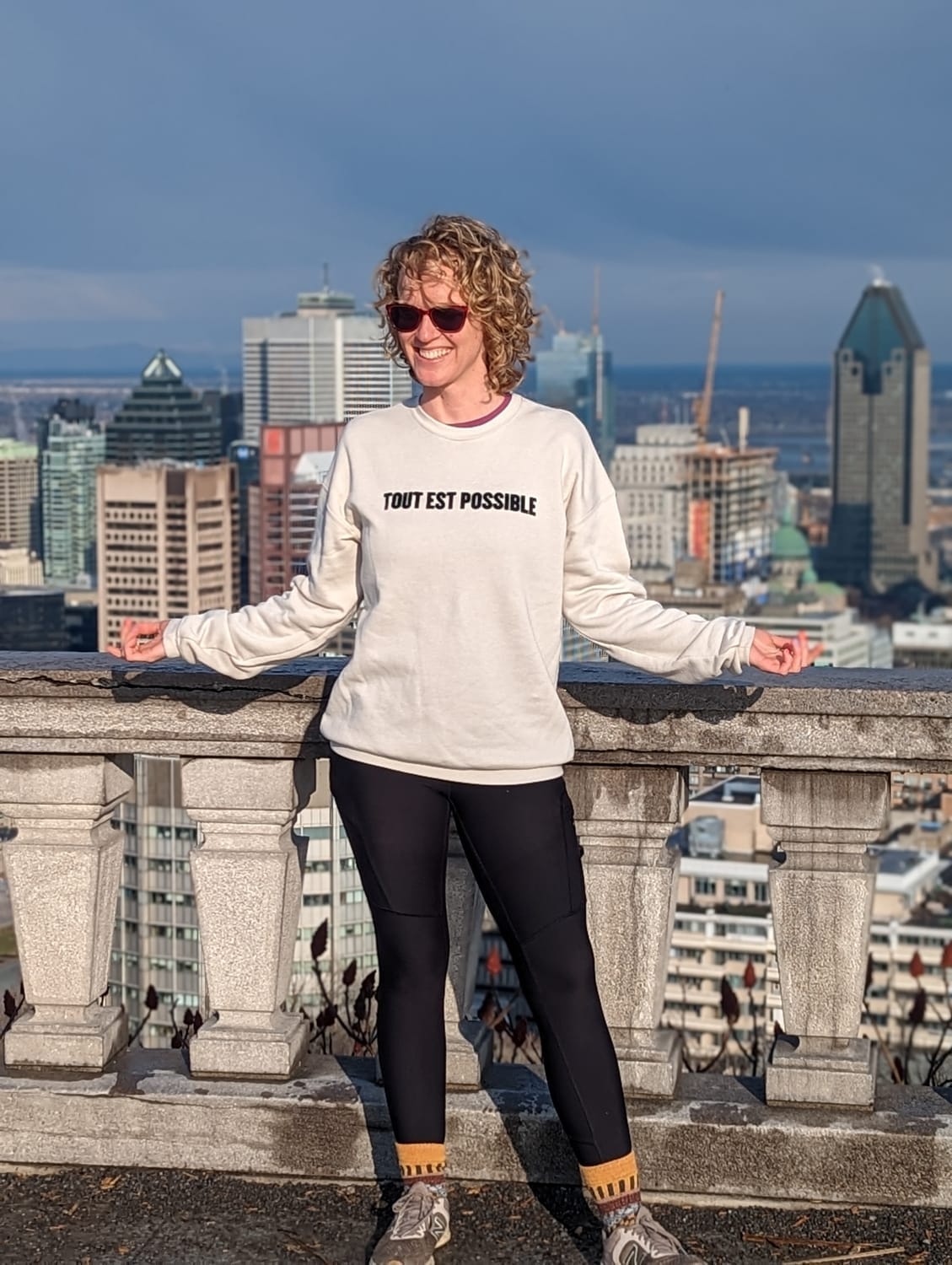
As a professional counsellor, with a background in life coaching and yoga, Orissa offers an inviting space to explore the patterns and beliefs that keep us stuck. Her approach is integrative, blending relational, somatic, and cognitive methods to nurture the mind, body, and nervous system. Orissa believes deeply that we don't need to be fixed, that we are all capable of profound transformation and deserve to feel truly good in our lives. Whether you are navigating mental, emotional, or physical well-being, Orissa helps you unpack what’s holding you back.
In her blog, she writes about mindset, nervous system regulation, and holistic wellness.
Thanks for reading!